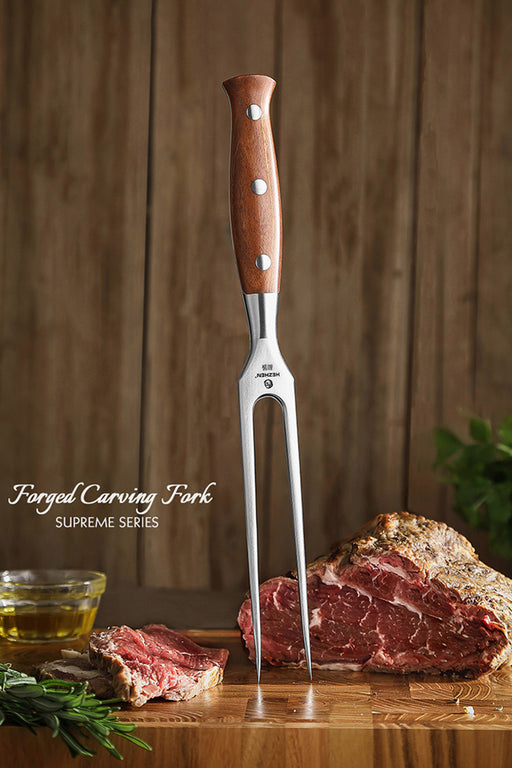
Carving meat is an art that requires precision, and having the right tools on hand is essential for achieving perfect slices. Among these tools, the carving meat fork plays a pivotal role. Not only does it help secure the meat while slicing, but it also aids in serving and presenting the dish in the most appealing manner. Selecting the ideal carving meat fork can significantly enhance your culinary experience, making it crucial to understand what features to look for when choosing one.
Understanding the Importance of a Carving Meat Fork
The meat fork is designed to assist in stabilizing and holding meat securely in place while carving. Its sharp, pointed tines penetrate deeply, ensuring that the meat remains steady, which is especially important when dealing with large roasts or poultry. This stability allows for cleaner and more precise cuts, resulting in a better presentation and improved texture of the slices.
Key Features to Consider
Material and Durability
When selecting a fork for meat, the material is a fundamental aspect to consider:
- Stainless Steel: Known for its durability and resistance to rust and corrosion, stainless steel is a popular choice for carving forks.
- High-Carbon Steel: Offers exceptional sharpness and edge retention, although it may require more maintenance to prevent rust.
- Bamboo: An eco-friendly option that is lightweight and easy to handle, though it may not offer the same durability as metal alternatives.
Design and Ergonomics
The design of the carving forks should facilitate ease of use and comfort:
- Handle: Look for ergonomic handles that provide a comfortable grip, reducing strain during extended use.
- Tine Length: Longer tines can hold larger cuts of meat, while shorter tines offer more control over smaller pieces.
- Weight Balance: A well-balanced fork ensures better control and reduces fatigue.
Complementing Your Carving Set
A meat carving fork is often part of a larger carving set, typically including a carving knife. Ensuring that both tools complement each other in terms of design and functionality can elevate the carving experience. Matching materials and styles not only enhance aesthetic appeal but also ensure that both tools work seamlessly together.
Maintenance and Care
Proper maintenance extends the life of your carving meat fork:
- Cleaning: Hand washing is recommended to preserve the integrity of the materials and avoid damage from harsh dishwasher detergents.
- Storage: Use a protective case or a magnetic strip to store the fork safely and prevent dulling or bending of tines.
- Sharpening: Periodically check the sharpness of the tines and sharpen as needed to maintain optimal performance.
Conclusion
Choosing the right carving meat fork involves considering a variety of factors, including material, design, and how well it complements your existing carving tools. By focusing on these aspects, one can ensure an enjoyable and efficient carving experience. Whether for a professional kitchen or home use, a well-chosen fork can make all the difference in food preparation and presentation.
